

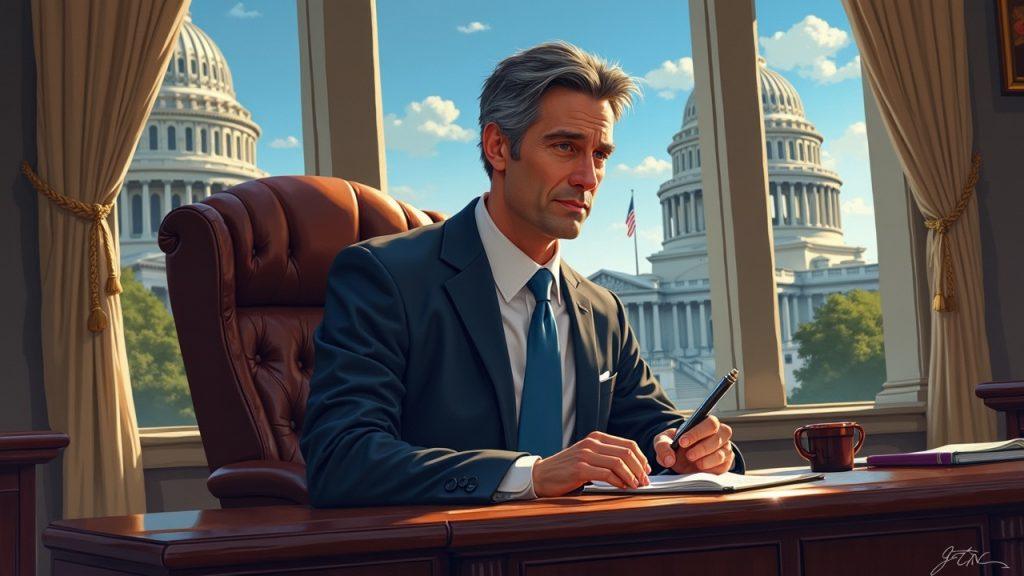
President Donald Trump nominated Kevin Warsh to lead the U.S. Federal Reserve on Jan. 30, 2026, and the announcement immediately shifted the conversation from inflation optics to what a more growth-tilted Fed could look like. Commentators treated the pick as a potential pivot away from the Fed’s recent inflation-first posture, while also raising familiar questions about institutional independence and how political pressure could show up in policy expectations.
Warsh, 55, served as a Federal Reserve governor from 2006 to 2011, and markets are now stress-testing his track record for signals on rates, supervision, and the Fed’s posture toward digital assets. For compliance and risk teams, this is less about a single headline and more about how quickly policy assumptions might need to be recalibrated ahead of a Senate confirmation process that looks set to be high-friction.
What Warsh’s record tells markets to focus on
Warsh’s profile blends Wall Street and policymaking. His prior work at Morgan Stanley and his tenure at the Fed during the 2008 financial crisis give him credibility with both markets and Washington. Since leaving the Fed, he has been affiliated with the Hoover Institution and has served on corporate boards, keeping him visible in policy debates and connected to private-sector governance expectations.
On policy, the public record described in recent commentary is mixed in a way that will keep both doves and hawks reading closely. Warsh has been described as hawkish on inflation and skeptical of aggressive easing, including publicly arguing in Sept. 2024 against rapid interest-rate cuts. He has also criticized the low-rate approach taken after the 2008–09 crisis, suggesting a preference for tighter discipline when markets are pricing in faster accommodation.
His remarks on tariffs and bitcoin add another layer to how stakeholders interpret his framework. More recently, he defended tariff measures from the administration and framed bitcoin not as a competitor to the dollar but as a data point that could inform monetary policy. That characterization matters because it positions digital assets as an input into the broader macro dashboard, not as an existential challenge to sovereign currency.
The confirmation fight and why it changes the risk calculus
The nomination is already colliding with an unusually charged political condition. Senator Thom Tillis said he would oppose Warsh unless the Department of Justice drops a criminal investigation into current Fed Chair Jerome Powell. Powell has linked the probe to the administration’s dissatisfaction with Fed rate decisions, and that back-and-forth is now being treated by critics as a direct stress test of the Fed’s independence.
Even if the core themes stay familiar, the process itself looks structurally disruptive. The confirmation debate is likely to focus on Warsh’s policy preferences, private-sector ties, and how he would balance growth with price stability, but the DOJ layer elevates the institutional stakes. That combination increases headline sensitivity and makes it harder for markets to cleanly price the path of policy without political noise.
If Warsh is confirmed, expectations could shift again, depending on how investors interpret his posture. A hawkish profile implies a slower glide path toward accommodation than some participants may be positioned for, which can ripple across rate-sensitive exposures and fixed-income assumptions. In the near term, the hearings and votes themselves create a volatility corridor, and risk teams should plan for rapid repricing around testimony and public remarks.
For digital-asset stakeholders, the implications are more about framing than immediate rule changes. Warsh’s view of bitcoin as an informational input suggests a Fed that treats digital assets as part of the macro dataset rather than a direct rival to the dollar. That stance could shape how the Fed engages with ongoing workstreams and supervision priorities, even before any concrete policy decisions emerge.