

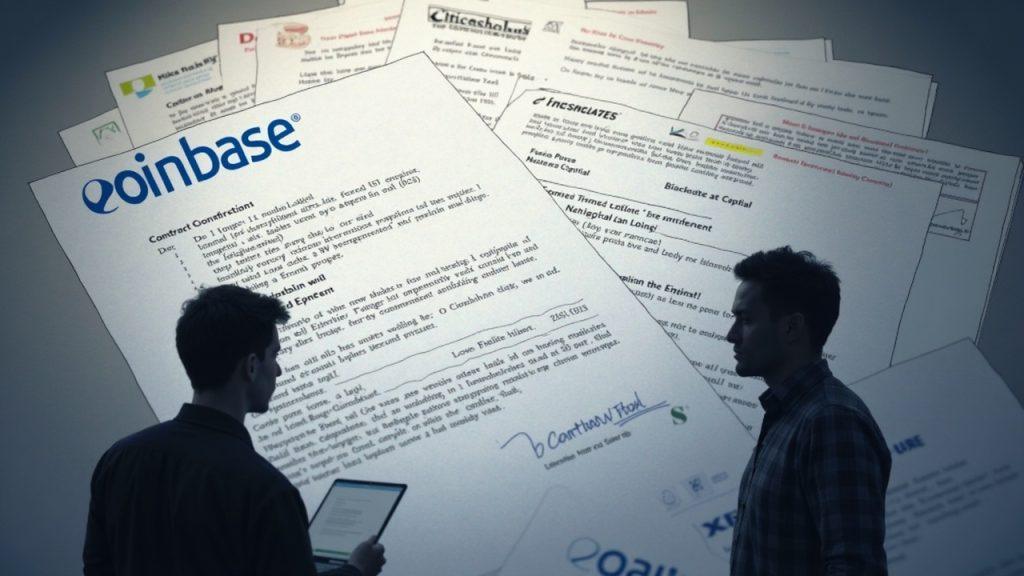
Newly unsealed documents from the U.S. Department of Justice dated February 2, 2026 indicate that Jeffrey Epstein, via IGO Company LLC, participated in an early Coinbase investment in December 2014. The correspondence describes a roughly $3.0–$3.25 million injection into the company at a reported valuation of about $400 million, prompting fresh scrutiny of how investor screening worked in the sector’s early growth phase.
The same email trail suggests Epstein later sold part of his position back to Blockchain Capital by 2018 for close to $15 million, and that well-known industry figures were involved in, or aware of, the conversations. The documents reference Brock Pierce and indicate that Fred Ehrsam was aware of Epstein’s participation and sought to set up a meeting connected to the investment.
What the unsealed records say
The records lay out a straightforward but sensitive sequence: in December 2014, Epstein—through IGO Company LLC—appears to have joined a Coinbase funding round with roughly $3.0–$3.25 million at a reported $400 million valuation. In practical terms, it reads like a standard early-stage check routed through an entity, but the identity of the investor is what makes the disclosure operationally consequential today.
The emails also point to a venture-led fundraising dynamic, with Blockchain Capital named in connection with the transaction and Pierce referenced in the flow of introductions. Separately, the correspondence suggests Ehrsam was aware of the participation and discussed meeting arrangements tied to the round, which underscores that this wasn’t merely an arms-length allocation in a blind pool.
By 2018, the documents indicate Epstein sold half of his Coinbase holding back to Blockchain Capital for close to $15 million, crystallizing a meaningful return on the initial capital. That detail matters because it frames the episode not just as historical cap-table trivia, but as a reminder that secondary transactions can surface later and become part of the governance narrative around who held what, and when.
The same tranche of materials also references Epstein’s ties beyond Coinbase, including an investment in Blockstream and exchanges of views with other prominent tech investors. Read together, the documents portray a broader pattern of engagement with early bitcoin and crypto infrastructure rather than a single, isolated touchpoint.
Why it matters for compliance and governance
Even without any new allegations beyond what’s described in the emails, the optics create a real governance issue: early-stage capital routed through intermediaries can make diligence feel “handled,” right up until it isn’t. The chain of introductions described in the documents highlights how quickly fundraising can move when a round is hot—and how easily reputational risk can be imported into a cap table when screening standards aren’t explicit and consistently applied.
The post-investment clean-up angle is equally instructive, because secondary sales can reduce immediate exposure while still leaving a long tail of disclosure and transparency questions. The reported 2018 buyback of half the stake illustrates how ownership can shift through private transactions that may not be top-of-mind operationally at the time, but can become highly salient later for governance, partner diligence, and investor relations.
The immediate industry impact is procedural: legal, compliance, and IR teams are likely to tighten documentation standards for high-net-worth onboarding, intermediary-sourced allocations, and historical ownership visibility. For institutional stakeholders reviewing legacy exposures, the practical expectation will be clearer audit trails around investor vetting and more durable reporting norms that anticipate retrospective scrutiny.