

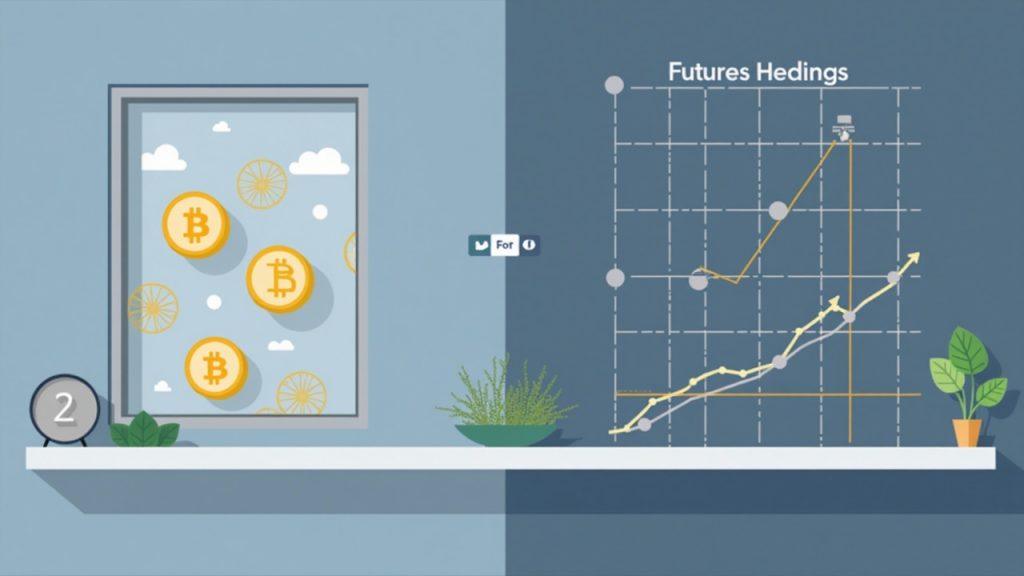
Speculation about Jane Street’s trading has put a spotlight back on the plumbing behind spot Bitcoin ETFs and the way Authorized Participants (APs) manage risk. What looks like “ETF inflows = spot buying” in headlines can break down in practice. As a result, ETF creations can be supported by hedging that leans on derivatives first, rather than immediate spot transactions.
That nuance matters for investors, product teams, and regulators because it shapes how flows show up in price action. The operational reality is that ETF inflows don’t always translate into same-day, same-minute spot-market support. When the hedging path runs through futures, the market can feel more “derivatives-led,” especially intraday.
🚨IS JANE STREET ALSO BEHIND THE OCTOBER 10TH CRASH, THE LARGEST LIQUIDATION EVENT IN CRYPTO HISTORY?
Look at the pattern.
Jane Street:
• Made $10B in trading revenue in a single quarter, more than major Wall Street banks.
• Banned from India’s markets after regulators… https://t.co/MT35kBYxFd pic.twitter.com/D7WwthsHbC— Bull Theory (@BullTheoryio) February 25, 2026
The “grey window” and why timing matters
Late-February 2026 reporting described Jane Street as a prominent AP for major ETFs such as BlackRock’s IBIT, placing it at the center of creation and redemption mechanics. APs sit in the middle of a workflow where trading decisions, hedges, and settlement don’t always move in lockstep. Market-structure specialists cited by Decrypt framed this as a temporal mismatch—a “grey window”—where ETF share creation, hedging activity, and spot settlement are not tightly linked.
In that window, APs may hedge exposure without immediately buying or selling spot Bitcoin. That timing gap can mute direct spot pressure because the hedge can be expressed through derivatives instead of spot. The practical implication is straightforward: ETF AUM can grow while spot buying is delayed, distributed, or partially replaced by hedges that don’t require spot execution right away.
Analysts in the coverage also pointed to how common it is for APs to use futures for hedging—and to the incentive to earn carry when futures trade at a premium (contango). If futures are rich, hedging via futures can turn risk management into a basis trade as well. In that framing, price discovery can drift toward derivatives venues because that’s where the marginal hedge and rebalancing activity is happening.
Why IBIT holdings aren’t a clean “bullish signal”
Public filings showing increased IBIT holdings by Jane Street in Q4 2025 were widely interpreted on social media as directional accumulation. The coverage pushed back on that narrative by treating those positions as operational inventory, not a simple long bet. Market veterans interviewed argued these holdings are often delta-hedged and tied to market-making and options writing rather than outright exposure.
Jeff Park (ProCap, adviser to Bitwise) captured the tradeoff at the center of the discussion. He argued AP exemptions can support orderly market making while still creating a timing disconnect between ETF inflows and spot purchases. That’s not presented as wrongdoing; it’s presented as a design feature with real consequences for how flows map to spot activity.
Everyone is asking: "Is Jane Street why Bitcoin isn't at $150k?"
As expected, the answer is trickier than the question. But it's also more structurally unsettling than the conspiracy theory itself—and once you understand the actual mechanics, you won't be able to unsee them👇 pic.twitter.com/iLEeJpDeo4
— Jeff Park (@dgt10011) February 25, 2026
Ryan McMillin (Merkle Tree Capital) emphasized the hedge mechanics and the economics of contango. He noted APs can hedge using futures and potentially earn basis carry, allowing ETF AUM expansion without immediate spot buying. In other words, the system can expand exposure efficiently—even if it doesn’t produce the kind of spot buying some investors expect.
Louis LaValle (Frontier Investments) and Michael Green (former hedge fund manager) reinforced a common warning about reading 13F data too literally. They argued that 13F filings can mislead because they omit offsetting options and futures positions. The point isn’t that filings are useless; it’s that they’re incomplete for understanding net exposure and intent.
Nik Bhatia (analyst) offered a similar interpretation through the lens of incentives and strategy selection. He suggested IBIT ownership often reflects options-writing, arbitrage, and systematic trading incentives rather than a clean directional view on Bitcoin. That framing lines up with the broader theme: what looks like “accumulation” can be inventory supporting a broader set of trades.
Observers also revisited the recurring intraday weakness around 10:00 a.m. ET. Experienced participants described that pattern as more consistent with hedging adjustments around the U.S. equity-market open than with a coordinated daily sell-off. If APs are rebalancing exposures at that time, brief volatility can be a mechanical byproduct rather than a narrative-driven event.
The debate has also been amplified by an unrelated lawsuit from Terraform’s bankruptcy estate alleging misconduct by Jane Street during the Terra/Luna collapse in May 2022. While the litigation is described as separate from ETF mechanics, it has clearly raised the temperature around how people interpret the firm’s behavior today. In practice, it increases scrutiny and keeps public attention locked on AP activity.
Across the reporting, the prevailing expert view was that the behaviors described fit within standard market-making and hedging playbooks. The core takeaway presented was that these are ordinary, legal tools—even if the optics confuse non-specialists. That distinction matters because “unintuitive” and “improper” are not the same thing.
At the same time, several market-structure voices warned that ETF design combined with heavy derivatives usage may tilt the ecosystem toward institutional arbitrage over direct spot liquidity, especially during stress. They cautioned that this setup could reshape price discovery in ways that only become obvious when markets are under pressure. That’s less a prediction of failure and more a reminder that structure determines behavior.
From a product and oversight perspective, the reporting argued that documentation, trade surveillance, and disclosures should reflect how AP hedging actually works. If the market runs through exemptions and derivatives, transparency should be designed around those realities—not around simplified retail assumptions. Regulators, in that view, may also evaluate whether ex