

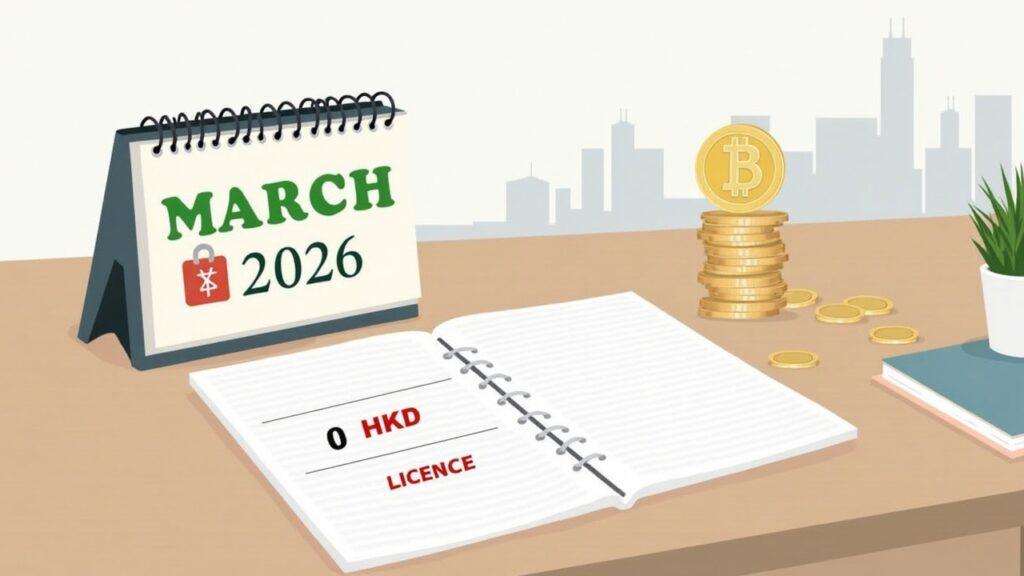
Hong Kong’s push to launch regulated HKD stablecoins has run into a visible delay, with the Monetary Authority’s public register still showing zero licences issued as of April 1, 2026. The missed March target signals that the city is prioritizing regulatory control over speed as it builds its stablecoin framework.
That delay has postponed expectations that an initial group of banks and crypto platforms would be cleared to enter the market. What was supposed to be the first concrete phase of Hong Kong’s regulated stablecoin rollout has instead become a test of how strict the city intends to be with issuer approval.
Compliance demands are slowing the rollout
The Stablecoins Ordinance took effect in August 2025, but the licensing process has proved more demanding than many in the market expected. The framework requires detailed KYC and AML controls, including strict identity requirements for every stablecoin holder, which has raised the compliance threshold for applicants.
Those standards have added significant operational complexity to the review process for the roughly 77 entities that had expressed interest in securing a licence. The combination of extensive documentation, deeper identity checks and more bank-like compliance obligations has become the main reason approvals did not arrive in March.
Among the names widely viewed as potential early candidates were HSBC, Standard Chartered, OKX and Huobi. The absence of approvals for any of these expected front-runners reinforces the message that Hong Kong is taking a far more cautious approach than the market had hoped.
Hong Kong is choosing control before competition
Regulators have effectively framed the delay as an intentional trade-off. The city’s stance is not a retreat from stablecoin policy, but a quality-over-speed approach aimed at putting stronger controls in place before activity scales across institutional and retail channels.
That approach will shape more than just the timing of the first licences. By forcing issuers to meet stringent identity, audit and compliance standards from the start, Hong Kong is also setting the economic and operational model that future HKD stablecoin providers will have to follow.
The result is that the next stage of the market is likely to be defined less by competition and more by vetting, remediation and systems review. For now, Hong Kong’s stablecoin project is moving forward, but on a timetable dictated by regulatory discipline rather than market urgency.