

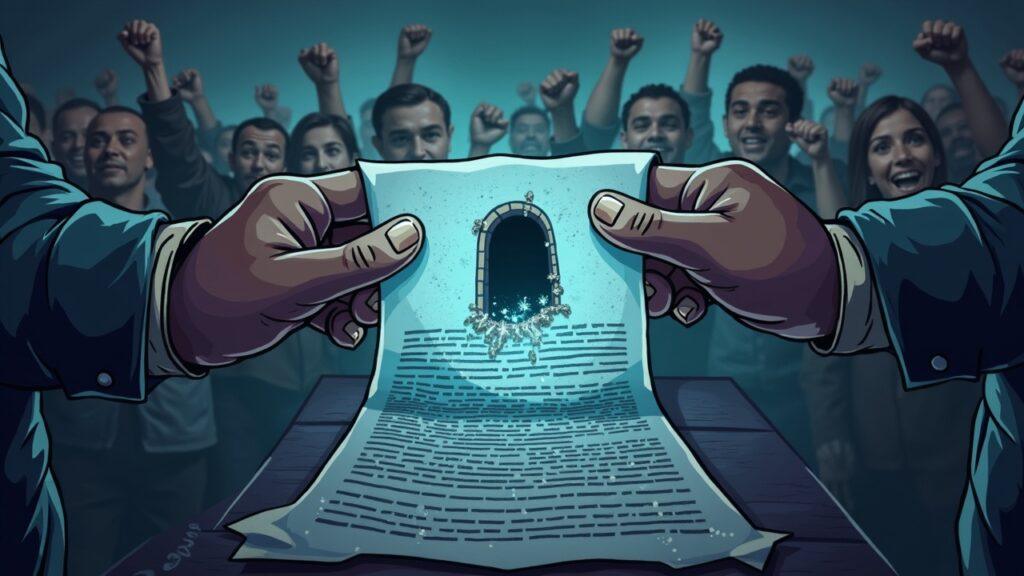
World Liberty Financial has been pushed into a deeper credibility crisis after Justin Sun accused the project of embedding undisclosed blacklist-style controls that let insiders freeze token holders’ funds. The accusation cut straight to the token’s core promise of decentralization, and it landed at a moment when WLFI was already under pressure from lending and unlock concerns. Bloomberg reported that Sun, one of the project’s biggest backers, said the team had secretly built controls that could immobilize investor balances and called the project “a trap masquerading as a door.”
The market reaction was swift. WLFI had already fallen to an all-time low by April 10 as scrutiny mounted over its internal financing structure, and market data cited in financial coverage showed the token’s capitalization shrinking by roughly $427 million to about $2.58 billion from nearly $3 billion. By the time Sun’s allegations escalated, investors were no longer just repricing the token, but repricing the project’s governance risk.
A governance fight became a market event
Sun’s claims resonated because they were not entirely abstract. In September 2025, on-chain data showed that World Liberty blacklisted a blockchain address tied to him that held about 595 million unlocked WLFI tokens, then valued at roughly $107 million. At the time that Sun said his project-linked tokens had been frozen. That earlier blacklist action turned a new allegation about hidden control into a dispute with a visible precedent.
The present clash has now hardened into a legal confrontation. WLFI responded by threatening legal action, while Bloomberg described the broader situation as an investor revolt inside the Trump family-linked venture. This is no longer a routine argument between a token project and a disgruntled holder; it is a direct fight over whether key control powers were properly disclosed to investors.
That distinction matters for anyone exposed to the token. If blacklist or freeze powers existed and were not clearly explained, the risk is not merely reputational. It becomes a custody and governance problem, because a holder’s economic interest can be disrupted by contract-level authority they may not have fully priced in. A token can remain transferable in theory while becoming materially constrained in practice if insiders retain unilateral control points.
The deeper damage is to trust, not only price
Once investors begin to doubt whether a token’s control structure matches its public narrative, every other issue around liquidity, collateral, lending and distribution becomes harder to absorb. WLFI had already been under pressure from questions around its lending activity and token economics before Sun’s latest attack. The backdoor allegation did not create WLFI’s fragility, but it gave the market a sharper reason to punish it.
That is why this episode is likely to outlast the first round of price damage. Celebrity branding and political association may still attract capital, but they do not reduce the need for transparent smart-contract permissions, clear governance disclosures and well-defined investor protections. What investors are now demanding from WLFI is not hype, but proof that control over the token was disclosed honestly and can be defended legally.