

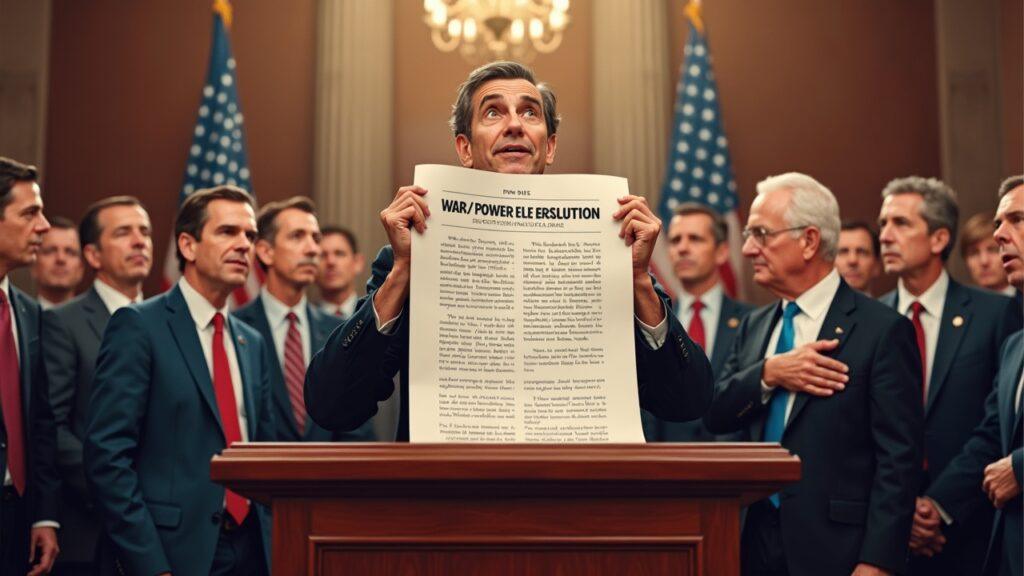
The United States Senate delivered a narrow but meaningful procedural setback to unilateral military action, voting 50-47 to discharge a War Powers resolution from committee that would direct the removal of U.S. Armed Forces from hostilities within or against Iran unless Congress formally authorizes the mission. The vote does not change policy on the ground, but it signals a sharper congressional push to reclaim oversight of military escalation.
The motion drew support from 46 Democrats and four Republicans: Senators Susan Collins of Maine, Lisa Murkowski of Alaska, Rand Paul of Kentucky and Bill Cassidy of Louisiana. Opposition came from 46 Republicans and one Democrat, Senator John Fetterman of Pennsylvania. Three Republicans, Senators John Cornyn of Texas, Thom Tillis of North Carolina and Tommy Tuberville of Alabama, were absent. Their presence likely would have produced a tie, defeating the measure.
A Tactical Win, Not a Policy Shift
The discharge vote marks the eighth Senate vote on similar War Powers efforts, after seven previous attempts failed to advance. That history gives this outcome political weight, even if the resolution still faces a steep path before becoming enforceable.
The measure would require U.S. forces to be removed from hostilities with Iran unless Congress passes either a declaration of war or a specific authorization for the use of military force. Even if it clears the full Senate, it must still pass the Republican-led House. It also faces an anticipated presidential veto, which could only be overridden with two-thirds majorities in both chambers.
Senator Tim Kaine of Virginia has led the push, arguing that rising public opposition and economic pressures, including high gas prices, are building momentum for congressional action. Cassidy, one of the four Republicans who backed the motion, said the administration had left Congress “in the dark on Operation Epic Fury.”
Markets Watch for Oversight and Executive Response
The immediate issue is not operational change but the prospect of heavier congressional scrutiny. Further legislative movement could increase reporting requirements, political pressure and oversight of defense operations tied to Iran.
Energy markets and industries exposed to Middle East disruption have reason to monitor the next procedural steps closely. Floor scheduling in the Senate, action in the House and any executive response could shape market signals, defense contracting timelines and broader risk assumptions.
The measure sits between symbolism and enforceable constraint. Its future depends on whether Congress can turn a procedural breakthrough into legislative passage, and whether it can overcome the veto hurdle that still stands between the resolution and binding limits on the use of force.