

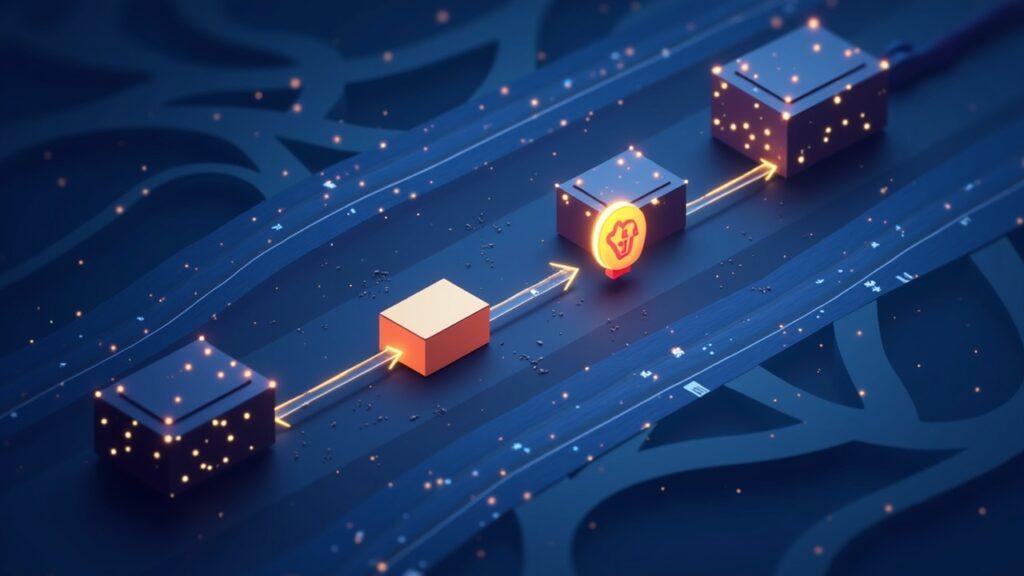
The Sui network has activated a protocol-level feature that removes gas fees for stablecoin transfers, allowing users and automated systems to move supported stablecoins without maintaining a native SUI balance for transaction costs. The update, confirmed by an official blog announcement and accompanied by a verified project demonstration, targets settlement friction in agent-driven workflows and high-frequency payment routing.
Layer 1 networks typically require transactors to hold native tokens to cover computational fees. Sui’s implementation abstracts that requirement for eligible stablecoins, shifting sponsorship to the protocol layer. The project’s documentation notes that transfer fees are now zero for the end user, while its accompanying demo emphasized continuous execution for automated trading and agentic commerce. By decoupling stablecoin settlement from native token acquisition, the network reduces a known friction point for systems that operate on predefined, asset-specific logic.
No need to top up for gas.
No risk of trades halting.
No positions wiped while you sleep.Gasless stablecoin transfers on Sui.
Your agents trade the way they were built to: uninterrupted. pic.twitter.com/O9T3nix0TN
— Sui (@SuiNetwork) June 24, 2026
Infrastructure adjustments of this kind reflect a gradual shift in how L1 ecosystems position themselves relative to automated activity. AI agents and payment scripts generally lack the interface layers to monitor gas markets, approve multi-token approvals, or manage fee liquidity in real time. Removing the native token requirement aligns network mechanics with the operational reality of autonomous systems, which are typically deployed to execute stable, predictable flows. Whether this change encourages broader agent deployment or simply optimizes existing routing depends on how quickly wallets, market makers, and developer kits integrate the sponsored transaction standard.
The feature is live on Mainnet according to the project. Its structural impact will likely become clearer through observed routing behavior, stablecoin volume migration, and sustained on-chain agent activity rather than immediate social attention. Additional confirmation on adoption metrics and sponsorship sustainability will provide a more precise measure of whether the infrastructure change alters how automated systems interact with Sui over time.