

NEAR AI has added GPT-6.1 Sol to its cloud model catalog as it continues building infrastructure around private inference and autonomous agents. The model arrives with a 1.05 million-token context window and support for text and image inputs, while NEAR describes it as suited to complex coding and agentic workflows. The addition broadens model choice inside NEAR AI Cloud, but it does not make GPT-6.1 Sol a confidentially hosted model. NEAR AI’s current model catalog classifies it under the platform’s Incognito privacy tier, meaning the model itself runs on the provider’s infrastructure.
That distinction matters because NEAR AI is simultaneously developing a separate confidential-compute stack. In February, the project introduced IronClaw and its Confidential GPU Marketplace, pairing an open-source agent runtime with infrastructure for running supported AI workloads inside Trusted Execution Environments, or TEEs. NEAR is effectively building multiple execution paths under one cloud layer rather than applying the same privacy architecture to every available model.
Confidential Inference and Incognito Are Different
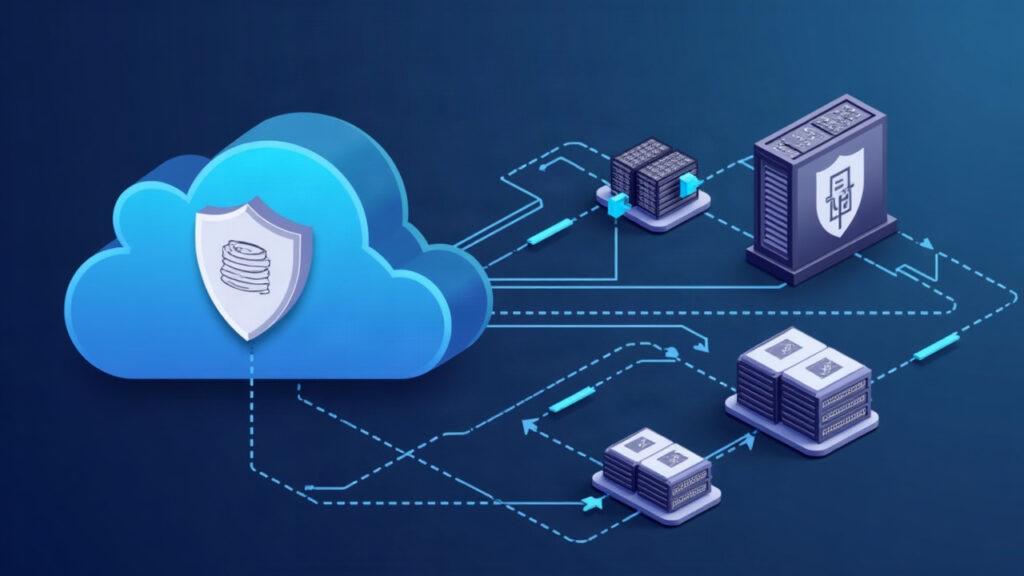
For models hosted directly in its confidential tier, NEAR AI uses Intel TDX virtual machines alongside confidential GPU infrastructure. Prompts are decrypted inside the protected environment so inference can occur, while the host operating system and infrastructure operator are isolated from that memory. Hardware-backed attestations can then provide evidence about the environment that executed the request. Confidential computing protects data while it is being processed by shifting the trust boundary into isolated hardware, not by keeping information encrypted at every point of execution. Intel similarly describes TDX as providing hardware-isolated virtual machines with encrypted memory and remote attestation.
GPT-6.1 Sol uses a different path. NEAR AI lists the model as Incognito, where its TEE-based router hides the user account from the upstream provider but sends the workload onward for inference. The upstream model provider can therefore process the prompt, while users do not receive the same hardware-attested execution guarantee available with NEAR-hosted confidential models. This separation has become increasingly important as NEAR AI expands access across confidential and externally hosted models.
The architecture also explains why distribution integrations do not automatically preserve identical privacy guarantees. NEAR AI recently became an inference provider on OpenRouter, but its OpenRouter integration broadens model access without extending end-to-end confidential inference. Privacy is therefore a property of the execution route and model tier, not simply of using NEAR AI Cloud as an entry point.
IronClaw Extends the Stack Into Agent Execution
IronClaw adds another layer by focusing on what happens after a model produces a decision. The Rust-based runtime separates agent reasoning from actions, supports isolated tools and credential controls, and can require explicit approval for sensitive operations. That design makes the runtime responsible for constraining agent behavior while the inference layer determines how and where the model itself executes. NEAR has continued developing this architecture through a broader agent stack combining private inference, Intents and agent-to-agent commerce.
The Confidential GPU Marketplace addresses the compute side of the same equation. NEAR AI says supported workloads can run inside hardware-enforced enclaves and return attestations describing the execution environment. Its infrastructure has since added independent Intel Trust Authority verification, strengthening the verification path beyond relying solely on the cloud operator. Attestation reduces the amount of trust placed in the infrastructure provider, although it still depends on hardware, firmware and the underlying attestation chain functioning correctly.
Together, GPT-6.1 Sol, IronClaw and confidential inference show NEAR moving toward a cloud stack where developers can choose between model capability, privacy level and agent execution controls. The ecosystem already has production-facing confidential inference integrations, but public data still does not establish the scale of recurring developer workloads across the platform. The infrastructure is increasingly concrete; broad adoption will depend on whether developers consistently use these differentiated execution paths for production agents rather than treating them as isolated technical features.