

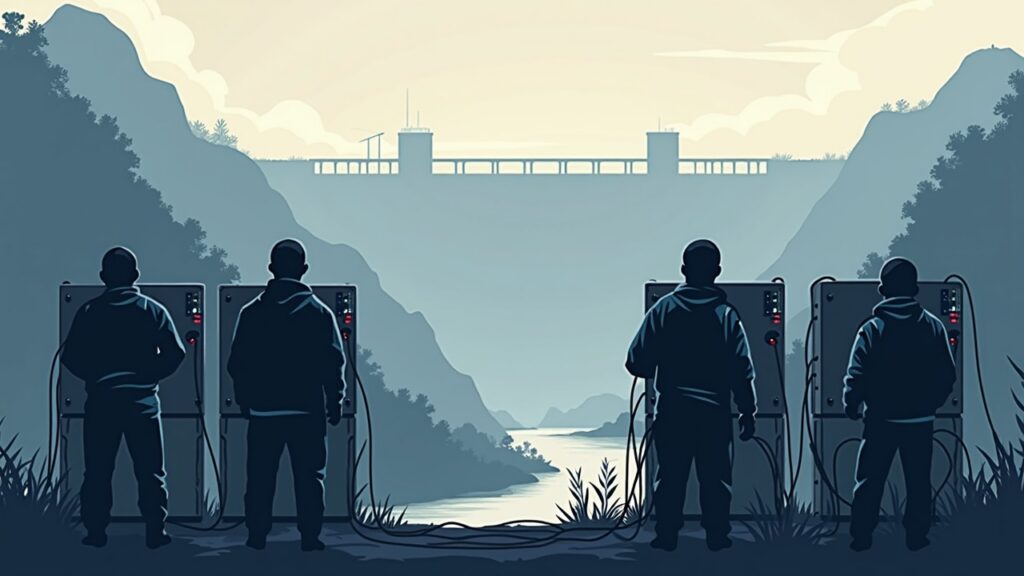
Tajikistan has moved to criminalize the unauthorized use of grid power for cryptocurrency mining after illicit operations inflicted roughly $4.26 million in estimated losses. In a country where hydropower supplies about 95% of electricity, the measure was approved by parliament on December 3, 2025 and is pending the president’s signature. The policy frames unauthorized mining as both an energy and a financial-security threat, targeting operations that tap the grid without legal authorization.
Penalties for crypto miners and legal changes
Parliamentary revisions to the Criminal Code (Article 253(2)) establish fines and prison terms calibrated to the scale of the theft, signaling a targeted crackdown on illicit mining operations. Individuals using stolen power to run mining hardware face fines of 15.000–37.000 somoni (about $1,650–$4,000) and imprisonment of two to five years. Organized groups or cases deemed “especially large scale” carry fines up to 75.000 somoni (about $8,250) and five to eight years’ imprisonment, reflecting heightened penalties for coordinated or high-impact schemes.
The law took form amid a surge of prosecutions: by August 2025 authorities recorded 190 criminal cases involving 3.988 people, underscoring the scale of enforcement activity. Attorney General Khabibullo Vokhidzoda framed the issue succinctly: “The illegal circulation of virtual assets facilitates a number of crimes such as the theft of electricity, material damage to the state, money laundering and other offences.” The revisions explicitly link virtual asset abuses to electricity theft and wider financial crimes, embedding crypto-related violations within the criminal code.

Energy impact, drivers and enforcement challenges
Low retail electricity costs—reported at roughly $0.02–$0.03 per kWh—helped draw miners following the 2021 exodus from China, where a crackdown displaced large mining fleets. Thousands of ASIC devices were reportedly connected to the grid through meter tampering and unauthorized direct hookups, increasing demand on an aging hydropower-dominated system that is seasonally vulnerable. Initial official estimates placed direct losses at 32 million somoni (approximately $3.52 million), with later aggregated damages rising to about $4.26 million across the recorded cases.
Officials say the policy response seeks to protect grid reliability and public supply during winter months when reservoir levels fall, emphasizing energy stability during seasonal stress. Enforcement faces practical obstacles: investigations require technical capacity to detect and attribute unauthorized loads and, according to reporting, law enforcement agencies contend with limited training and corruption risks that can blunt deterrence. For compliance teams and operators, hosting or facilitating mining without clear, legal electricity contracts now carries explicit criminal exposure, redefining operational risk profiles.
Tajikistan’s move transforms unauthorized crypto mining from an administrative infraction into a criminal offense with multi-year prison terms, linking energy security and financial crime controls. The immediate operational implication for miners and infrastructure operators is clear: formal electricity sourcing and metering compliance are now central to legal risk management. Next verified milestone: presidential signature and the first round of prosecutions under the new code, which will test enforcement capacity and the law’s deterrent effect.