

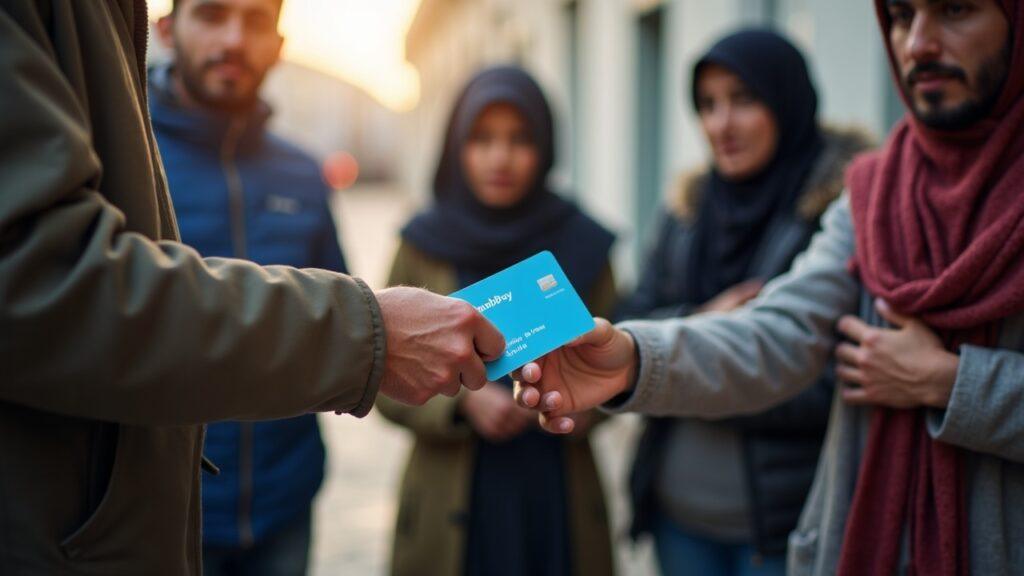
Algorand says its humanitarian payments work with HesabPay and UNHCR has expanded to support more than 600,000 refugee returnees in Afghanistan. The update positions the deployment as a live aid-delivery system rather than a limited blockchain pilot.
The Algorand Foundation said UNHCR has scaled reloadable card payments through HesabPay, an Algorand-powered platform designed for environments where traditional banking access is limited. The rollout has reportedly reached more than 625,000 refugee returnees and over 17,500 internally displaced people.
Blockchain Payments Move Into Humanitarian Infrastructure
The program has delivered more than $35 million in assistance, according to Algorand’s update. That figure makes the deployment relevant as a payments-infrastructure case rather than a market-driven crypto adoption story.
The significance lies in using blockchain rails for operational aid delivery. In humanitarian settings, settlement speed, traceability and reliability can matter more than speculation, trading volume or token-price movement.
Afghanistan’s banking constraints also make alternative payment infrastructure more practical. Reloadable cards connected to a digital payments system can help distribute assistance where conventional financial services are difficult to access.
Independent Validation Would Clarify the Full Scope
The reported scale comes from Algorand’s own foundation update, so the numbers should be treated as an operational claim rather than an independent audit. Further confirmation from program partners would help clarify the exact reach, disbursement mechanics and day-to-day usage.
Even with that caveat, the rollout gives Algorand a concrete humanitarian use case. The network is being positioned as infrastructure for aid distribution, not simply as a general-purpose blockchain competing for consumer or DeFi activity.
The update also sets up the Council’s Washington, D.C. meeting as a continuation of the same narrative. After the Berlin meeting, Algorand is emphasizing that the HesabPay deployment has continued to grow and remains active.
The main development is the reported expansion of blockchain-backed humanitarian payments in Afghanistan. The next useful indicators will be partner-level verification, updated disbursement totals, recipient activity data and clearer reporting on how the system performs in the field.