

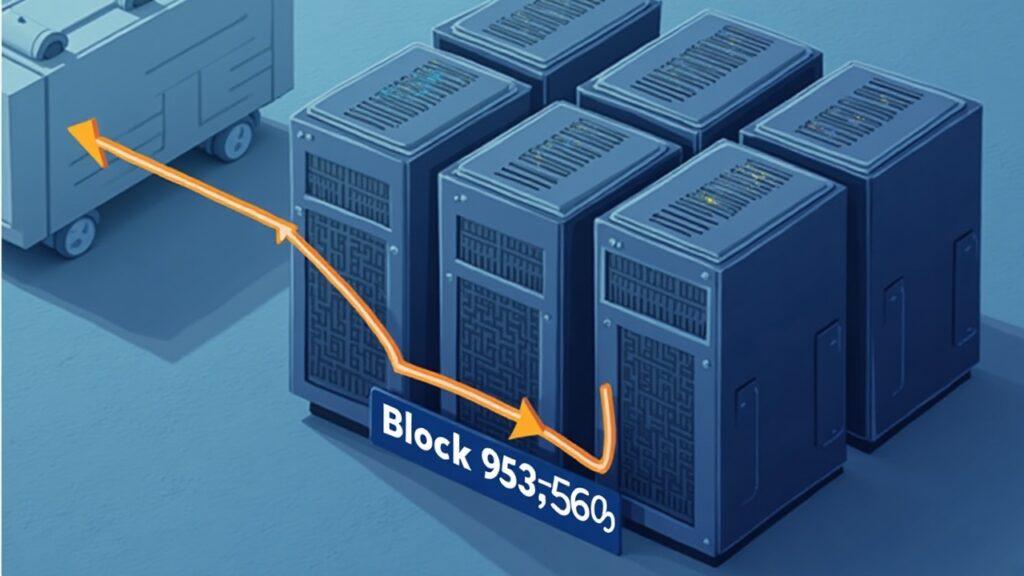
Bitcoin’s mining difficulty fell 10.09% in its latest adjustment, dropping to 124.93T after one of the largest downward retargets in the network’s history. Specialist mining accounts described the move as the 11th-largest negative adjustment on record and the second-largest downward shift of 2026.
The adjustment occurred at block 953,568, according to mining-focused posts tracking the retarget. Blockchain.com’s Bitcoin difficulty chart also shows the broader decline, confirming that the network has moved into an easier mining environment after a period of pressure on hashpower.
Difficulty Drop Reflects Weaker Hashrate Conditions
Bitcoin’s difficulty mechanism adjusts roughly every 2,016 blocks to keep block production close to its 10-minute target. When fewer miners are active and blocks slow down, the protocol lowers difficulty so remaining miners can find blocks more easily.
The latest retarget follows a reported decline in network hashrate from its October peak. Mining analysts said hashrate had fallen by roughly 23%, while one tracker placed the 7-day average near 894 EH/s.
That drop points to stress across mining operations, where profitability can tighten when Bitcoin’s price weakens, energy costs remain high or older machines become less competitive. In that environment, some miners may reduce activity, forcing the network to recalibrate.
For active operators, the adjustment can provide short-term relief. Lower difficulty means each unit of remaining hashpower has a better chance of earning block rewards, improving margins for miners that stay online.
Miner Relief May Depend on Next Adjustment
The difficulty reset does not automatically mean mining conditions have stabilized. It shows that the network responded to weaker block production, but the durability of the relief depends on hashrate recovery, Bitcoin’s price and operating costs.
One research thread linked the miner stress to June’s price decline and suggested the next adjustment could also be negative. That estimate remains preliminary, since future retargets depend on block times across the next difficulty epoch.
The broader significance is that Bitcoin’s self-correcting mining system is working as designed. When hashpower leaves the network, difficulty adjusts downward to restore balance without requiring external intervention.
For now, the latest retarget is a clear infrastructure signal: miners have faced enough pressure to trigger a major difficulty cut. The next checkpoint will be whether hashrate begins to recover or continues falling into another negative adjustment window.