


A fabricated story claiming Changpeng Zhao went missing in a Dubai surfing accident on May 24, 2026 triggered a wave of low-value meme tokens across Solana and BNB Chain. The episode showed how quickly misinformation can become on-chain activity, turning a false social-media narrative into speculative trading pressure.
微信群又瞎传!CZ好着呢,没事!
这都是FAKE NEWS! pic.twitter.com/4Z3fBb7fJL
— Wick李🔶 BNB (@SuperL9) May 24, 2026
The rumor reportedly began in Chinese WeChat groups before spreading across public platforms including X and Threads. Within hours, token creators launched dozens of short-lived meme coins, including names such as $RIPCZ and SEAZ, many with market capitalizations barely above $10,000.
Misinformation Turns Into On-Chain Load
The launches were tied directly to the fake narrative, with $RIPCZ and SEAZ emerging during the social-media surge. Their rapid issuance reflected the vulnerability of speculative markets to narrative shocks, especially when token creation costs are low and distribution is immediate.
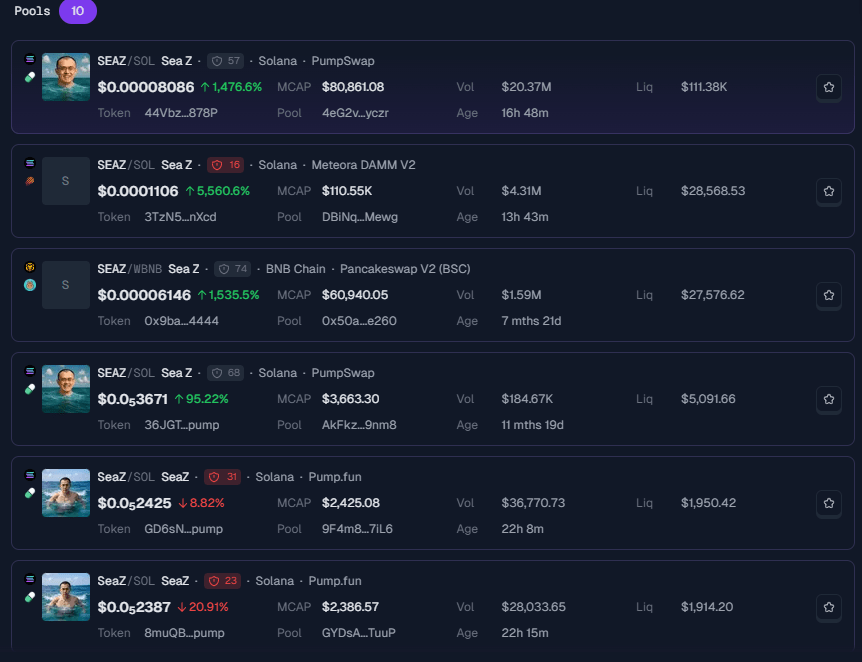
Sudden token launches and trading spikes increase transaction volume, placing short-term pressure on validators, relayers and infrastructure providers.
The challenge is not only technical throughput. Dozens of low-market-cap tokens appearing at once create a heavier screening burden, especially when potential manipulation, fraud and issuer opacity converge around a viral rumor.
Exchanges and Node Operators Face Episodic Risk
Zhao publicly denied the claim, saying he does not surf and warning against the spread of fake news. The denial did not erase the market signal created by the hoax, because tokens had already been issued and traded around the false story.
4. Watch out for fake news.
I don't surf (kite surfing is a diff sport). Dubai is not even a surfing destination. There is Surf Abu Dhabi, worlds largest man made surf place, which I haven't tried yet. No rip current there. Let's go together? https://t.co/gGxkVvJgOj
— CZ 🔶 BNB (@cz_binance) May 24, 2026
The episode echoes earlier cases where unverified narratives moved liquidity before facts caught up. That gap between rumor and verification remains a structural weakness, particularly for venues and tools that monitor token launches after momentum has already formed.
Liquidity providers also face added settlement and counterparty risk during these bursts. Thinly traded meme tokens can move sharply without fundamentals, leaving participants exposed to sudden reversals, poor depth and unreliable pricing.
The takeaway is capacity planning around spikes rather than averages. Rumor-driven activity can create short-lived but intense network demand, requiring systems that can absorb sudden increases in transactions and monitoring data.
Regulators and exchanges are likely to focus on automated flagging systems that connect suspicious social narratives with token issuance and transfer patterns. For investors and risk teams, rumor-linked tokens should be treated as high-tail-risk events, where liquidity, valuation and compliance risks can emerge within minutes.