

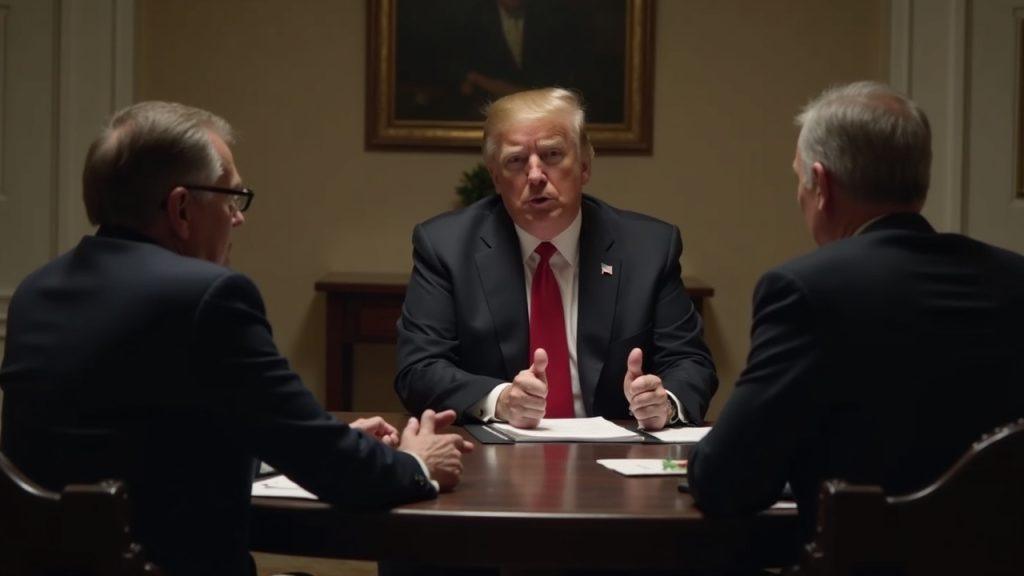
President Donald Trump intensified his public pressure campaign against Federal Reserve Chair Jerome Powell this month, urging him to cut interest rates immediately and framing delay as unnecessary. The confrontation turned monetary policy into a direct political battlefield rather than a routine institutional debate.
The pressure was unusually explicit. On March 13, 2026, Trump wrote on Truth Social that Powell “should be dropping interest rates, IMMEDIATELY, not waiting for the next meeting,” and on March 16, 2026, he pressed the issue again during a White House meeting. Trump did not limit himself to broad criticism, but instead pushed for immediate action outside the Fed’s normal schedule.
🇺🇸 PRESIDENT TRUMP JUST SAID
“The Fed should hold a special meeting to cut interest rates right now.”
“What’s a better time to cut interest rates than now? A third-grade student would know that.” pic.twitter.com/lXpSbYYJWQ
— Ash Crypto (@AshCrypto) March 16, 2026
A Direct Challenge to the Fed’s Process
During those exchanges, Trump reportedly called for cuts “right now,” asked, “What’s a better time to cut interest rates than now?” and at times floated reductions as large as “a full point” or more. The message was not simply that rates should come down, but that the Federal Reserve should act on the president’s timetable.
The tone of the clash also stood out. Trump used personal insults for Powell, calling him names including “numbskull,” “jerk,” and “stubborn MORON,” while also signaling that he intended to replace him when his term ends in May 2026. The confrontation moved beyond policy disagreement and into a highly personalized attack on the central bank’s leadership.
That escalation has drawn concern because presidential pressure on monetary policy is not unusual in itself, but this round went further in both tone and form. Analysts described the public and private demands as a notable break from more restrained presidential engagement with the Federal Reserve.
Why the Dispute Matters for Markets
The Federal Reserve, however, has kept a more cautious line. Projections for 2026 continued to point to a measured path, with one rate cut, or possibly none, still seen as the likely range for the year. The Fed’s posture suggests that Powell and his colleagues are still trying to preserve a data-driven process despite the political noise.
Analysts stressed that independence is central to that credibility. Julia Coronado of MacroPolicy Perspectives argued that the Fed’s autonomy allows it to make objective decisions tied to its dual mandate of maximum employment and 2% inflation. The core concern is that once markets believe the Fed is reacting to politics, confidence in its inflation-fighting role can weaken.
That is why the fallout extends beyond the current clash. Observers warned that politicizing rate decisions could unsettle markets, weaken the dollar, raise long-term borrowing costs, and introduce a new layer of governance risk into how investors price future Fed actions. The immediate issue is no longer only the level of rates, but whether monetary policy still appears institutionally independent.
With Powell’s term set to end in May 2026 and Trump openly signaling he wants a more rate-friendly successor, the conflict is likely to keep shaping expectations in the months ahead. For investors, treasuries, and institutional risk teams, the episode makes political pressure itself part of the policy outlook.