

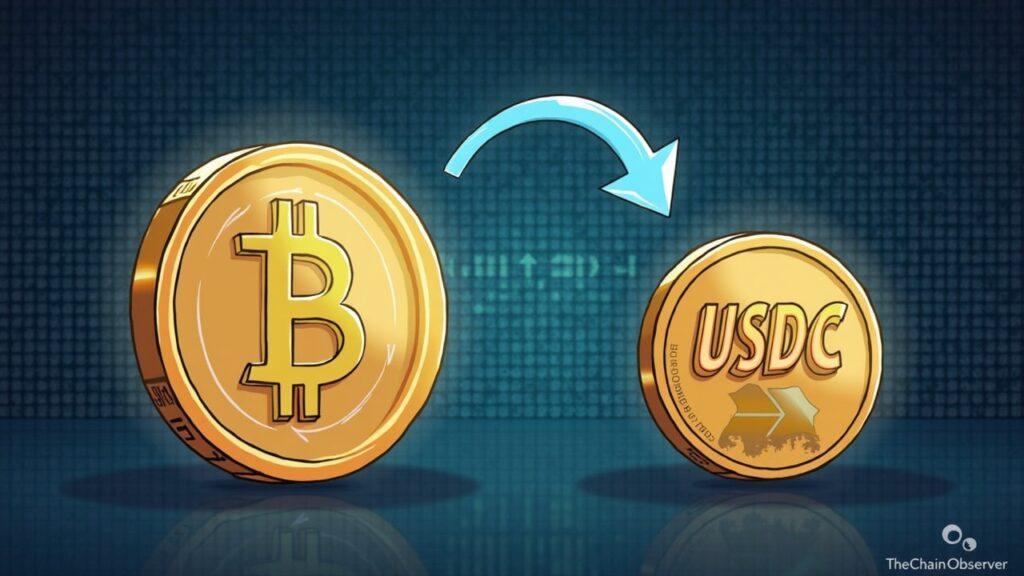
Tether has widened its advantage over Circle at a moment when stablecoins are being judged not only by reserve quality and regulation, but by how they behave under stress. The latest shift in market preference is being driven as much by crisis response as by balance-sheet scale, with USDT now sitting near $190 billion in circulation and remaining more than twice the size of USDC.
That gap has become more meaningful after a series of security incidents put stablecoin issuers under direct scrutiny. The key issue is no longer simply which token is larger, but which one market participants believe will be more useful when funds need to move quickly or be frozen decisively. In that environment, Tether and Circle are no longer competing only on adoption or regulatory optics, but on operational credibility during moments of market stress.
Drift Became the Flashpoint in the Divergence
The turning point came after the April 1 Drift Protocol exploit, which triggered a sharper reassessment of Circle’s posture. A class-action complaint filed in Massachusetts alleges Circle failed to freeze stolen USDC during an eight-hour window after the hack, while public reporting says the case centers on roughly $280 million in lost assets. That lawsuit transformed what might have been a technical incident into a broader challenge to Circle’s judgment and response model.
Jeremy Allaire’s defense did little to quiet that criticism. Circle’s chief executive described unilateral freezes without judicial or law-enforcement direction as a “moral quandary,” effectively arguing that restraint was part of the company’s operating principle. For many market participants, however, that answer made Circle look procedurally careful but commercially slower in a crisis.
Tether Chose the Opposite Optics
Tether responded in a way that made the contrast stark. It committed up to $127.5 million to Drift’s recovery effort, with partner support taking the package to roughly $148 million, and the protocol shifted its settlement preference toward USDT. That sequence gave Tether a clear tactical advantage: it looked more willing to supply liquidity, move fast and step into the vacuum left by Circle’s more restrained stance.
That impression has been reinforced by Tether’s broader enforcement messaging. Reuters reported in February that the company said it had frozen about $4.2 billion in tokens linked to illicit activity since 2023, evidence it continues to present as proof of active cooperation with authorities. Whether one sees that as a strength or as a governance risk, it has helped position Tether as the issuer more willing to intervene directly when markets are under pressure.
Velocity and Scale Are Now Pulling in Different Directions
The split between the two issuers is not cleanly one of success versus weakness. USDC had recorded about $2.2 trillion in adjusted transaction volume so far in 2026, compared with roughly $1.3 trillion for USDT, suggesting Circle still had faster on-chain velocity even as Tether held the larger capital base. That means USDC remains deeply relevant as a transactional rail, even while USDT is consolidating dominance as the market’s preferred reservoir of stablecoin liquidity.
The regulatory backdrop is making that divergence more consequential. The BIS warned this week that large stablecoins could amplify financial stress, resemble investment products more than cash, and require tighter global coordination, while U.S. and European rules continue to harden around reserve, transparency and AML expectations. In other words, both issuers are winning and losing on different axes at the same time: Tether on utility under pressure, Circle on institutional optics and throughput.
Stablecoin choice is becoming more situational. Firms that care most about immediate liquidity and intervention capacity may keep drifting toward USDT, while those prioritizing formal regulatory alignment and reserve visibility may still prefer Circle. What the market is pricing now is not just trust in the peg, but trust in the issuer’s behavior when something breaks.