

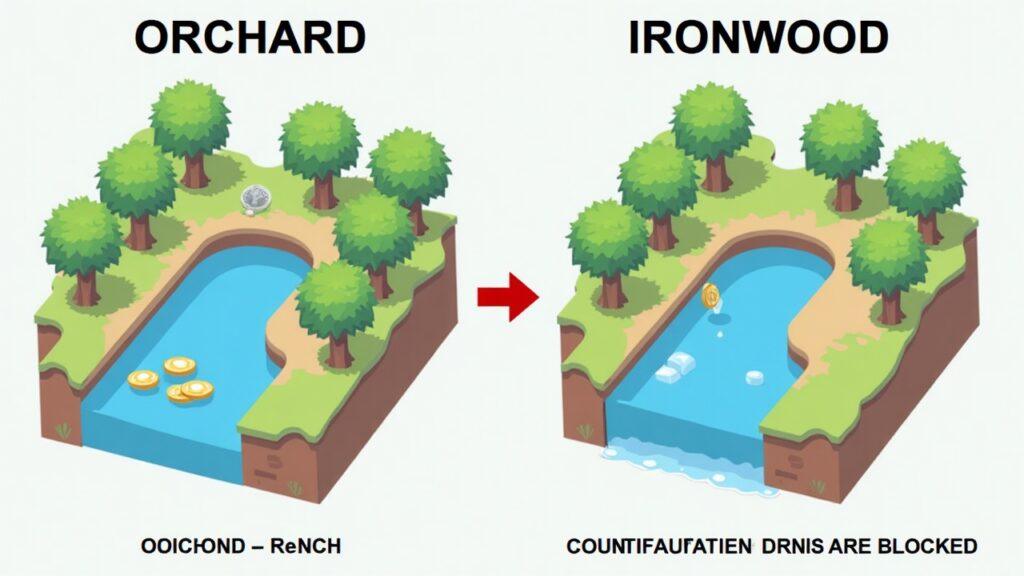
Zcash recovered roughly 45% from last week’s low after developers proposed Ironwood, a new network upgrade intended to restore confidence in the privacy coin’s circulating supply. The rebound brought ZEC back near $437 on Monday, though the token remained sharply lower for the week after the disclosure of a critical flaw in its Orchard shielded pool.
The recovery followed an emergency response to a counterfeiting vulnerability that developers said could have allowed an attacker to create unlimited fake ZEC inside Orchard without immediate public detection. Shielded Labs said the vulnerability was discovered on May 29 and remediated through coordinated emergency action completed by June 2, but the privacy design of Orchard prevents a simple cryptographic proof that the flaw was never abused.
Ironwood Aims to Restore Verifiable Supply
Ironwood is designed to move Zcash toward a repaired shielded pool while stopping new coin creation in the old Orchard pool. Under the proposal, users running Zcash software would be able to verify the circulating supply by checking balances across active pools, making supply integrity independently auditable again rather than dependent only on developer assurances.
The proposal would also make the transition out of Orchard visible in a narrow but important way. As coins migrate, any counterfeit ZEC would either be exposed when it attempts to exit the old pool or remain trapped and effectively destroyed. Shielded Labs has said it believes prior exploitation was unlikely, but Ironwood is meant to reduce the need to rely on that assessment.
That distinction explains why the market reacted so sharply in both directions. The initial disclosure hit confidence because Zcash’s value proposition depends heavily on privacy and supply credibility. The rebound came after developers presented a path toward restoring verifiability, but a proposal is not the same as an activated network upgrade.
Timeline Remains the Main Execution Risk
Developers have not set a firm activation date for Ironwood. The work still needs to be built, tested, reviewed and coordinated across wallets, exchanges, mining pools, node operators and other infrastructure providers before it can go live. That leaves implementation risk as the next major variable for both users and traders.
The proposal has also drawn attention outside the Zcash community. Investor Chamath Palihapitiya highlighted Ironwood as a way for node operators to tally balances across pools and confirm that supply remains clean, reflecting broader investor interest in whether privacy systems can preserve both confidentiality and auditability.
For now, Zcash is in a recovery phase, not a resolution phase. The bug has been patched, the market has partially rebounded and Ironwood offers a potential route to restore supply verification. Still, confidence will depend on whether the upgrade can be completed safely and accepted across the network.
The clean takeaway is that ZEC’s bounce reflects relief around a proposed fix, not proof that all risk has disappeared. Until Ironwood is implemented and the migration path is tested in production, the market will continue weighing technical repair against the uncertainty left by Orchard’s counterfeiting flaw.