

The Fellowship political action committee has emerged as a newly financed vehicle for crypto-linked political influence, disclosing about $11 million in early contributions for the 2026 midterm cycle. The most striking feature of the filing is the concentration of funding, with Cantor Fitzgerald providing $10 million and Anchorage Digital contributing roughly $1 million, immediately placing the PAC among the more visible new players in digital-asset political spending.
The structure around the committee adds another layer of significance. Jesse Spiro, who serves as Vice President of Regulatory Affairs at Tether US, is listed publicly as Fellowship’s chairman, while the PAC directed about $4.5 million in advertising payments to Nxum Group, a firm co-founded by Bo Hines, now head of Tether US. Those personnel overlaps give the PAC a distinctly industry-linked profile, tying fundraising, leadership and vendor relationships closely to well-known crypto-affiliated figures.
The Spending Is Already Targeted, Not Symbolic
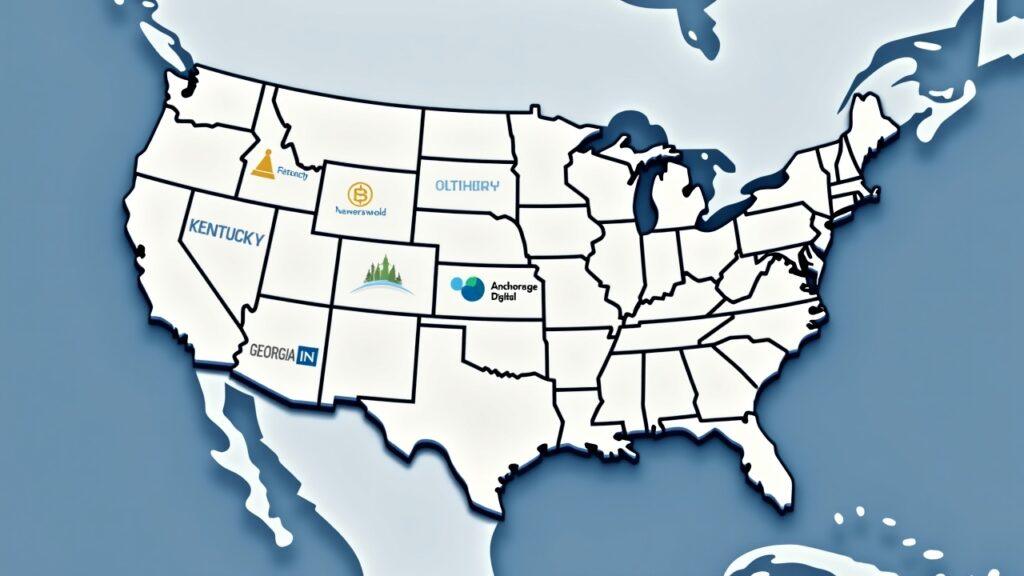
The filings show that Fellowship is not merely stockpiling resources ahead of the campaign season. Instead, it has already directed money into specific races, including about $850,000 to support Nate Morris in a Republican primary in Kentucky, $350,000 for Senator Pete Ricketts’ re-election effort in Nebraska, and $300,000 for Clay Fuller in a Georgia special election for the House. That pattern suggests the committee is operating with an immediate electoral strategy rather than a wait-and-see approach.
Fellowship has also announced endorsements in six Republican contests ahead of the November 2026 midterms, while categorizing parts of its spending as both issue advocacy and campaign advertising. The combination of direct race involvement and message-driven spending shows a coordinated attempt to shape both narrative and electoral outcomes, not just to signal industry presence in Washington.
The Filings Raise Compliance and Governance Questions
Public campaign finance filings offer a traceable record of who is funding, managing and servicing these efforts, which means counterparty review can no longer stop at commercial exposure alone when political activity is part of the picture.
That is especially relevant where senior executives hold outward-facing regulatory or advocacy roles while also sitting near political spending structures. Firms with exposure to entities involved in campaign activity, advertising procurement or high-profile policy advocacy may need to tighten conflict-of-interest assessments and strengthen governance controls. The reputational risk here is not abstract, but attached to real names, disclosed payments and visible political positioning.
The broader message from Fellowship’s emergence is that crypto-aligned political capital is becoming more organized as the 2026 midterms approach. For institutional actors, the practical consequence is a higher probability of scrutiny around political ties, vendor networks and governance standards as regulators and stakeholders pay closer attention to how industry money moves in public life. What looks like a campaign finance story on the surface is also a market-structure and risk-management story for the firms connected to it.