

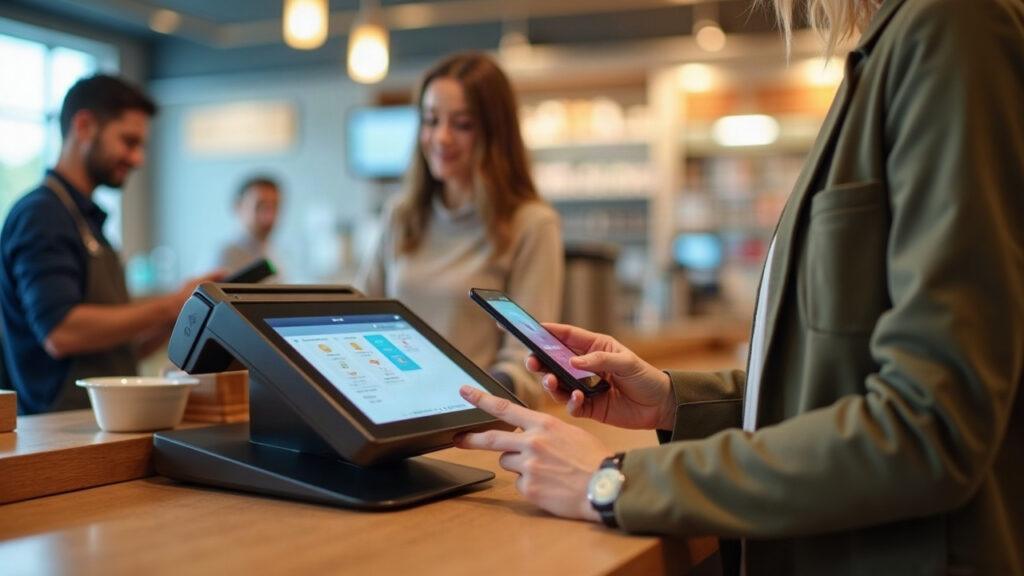
Stablecoin payments are moving closer to physical commerce as Ingenico extends its digital-currency infrastructure into conventional point-of-sale environments through WalletConnect Pay. According to Ingenico’s official announcement, millions of its Android terminals can support a Digital Currency Application designed to let customers pay directly from compatible mobile wallets, rather than routing the transaction through a crypto-linked card.
The integration, originally announced in January, supports five stablecoins including USDC, EURC and USDT across more than 700 compatible wallets. Funds move from the customer’s wallet toward the merchant’s payment provider, while merchants do not need additional hardware or to maintain balances in digital currencies. That shifts the stablecoin proposition from on-chain settlement alone toward a checkout experience designed to resemble an ordinary alternative payment method.
Physical Checkout Puts Stablecoin UX to the Test
Point-of-sale commerce creates a different adoption challenge from trading, treasury management or cross-border transfers. Customers expect a transaction to complete quickly and clearly, while merchants need predictable reconciliation and minimal operational disruption. Stablecoin infrastructure only becomes useful at retail when the blockchain layer can disappear behind a familiar payment flow. That same operational focus is increasingly visible in stablecoin-powered merchant and worker payouts, where the user experience matters as much as the underlying settlement rail.
Ingenico’s architecture uses the existing terminal to present stablecoins alongside other payment methods, with customers scanning a QR code and authorizing payment from their wallets. The company says the merchant can ultimately receive fiat value through the payment flow rather than directly managing crypto assets. The model therefore separates consumer use of stablecoins from merchant exposure to digital-asset custody, reducing one of the practical barriers to point-of-sale acceptance.
The technology has also moved beyond a product announcement. In August, WalletConnect, Ingenico and Rhuna deployed the checkout system in the VIP area of Romania’s UNTOLD Festival, where roughly 6,000 attendees had access to stablecoin and crypto payments through Ingenico terminals. The pilot demonstrated that the integration can operate in a live physical retail environment, but it did not establish broad consumer adoption or disclose transaction volumes.
That distinction matters. Other approaches to everyday crypto spending, such as self-custodial wallets connected to conventional card rails, rely on existing payment networks to bridge digital assets into commerce. Ingenico and WalletConnect are testing a different model in which the stablecoin transaction itself becomes part of the merchant checkout stack rather than being converted behind a traditional card payment.
Infrastructure Is Ahead of Consumer Demand
Retail availability should not be confused with demonstrated demand. In a September 24 update, Ingenico acknowledged that most consumers are not currently asking to pay with stablecoin wallets, even as banks, acquirers and payment providers prepare infrastructure for potential future demand. The company argues that flexible Android terminals can support these payment options without requiring merchants to replace existing hardware.
That cautious picture fits a broader payments market where stablecoins are already being integrated at several layers. Visa’s USDC settlement infrastructure for participating U.S. banks addresses institutional settlement, while Arc’s stablecoin-focused financial infrastructure targets payments and other on-chain financial workflows. Ingenico’s contribution sits further toward the consumer edge, where adoption depends on whether people actually choose stablecoins when standing at a checkout terminal.
The next meaningful milestone is therefore not another compatible wallet or terminal count. Evidence of recurring merchant deployments, transaction volumes and repeat consumer usage would show whether physical stablecoin checkout is progressing from technical availability toward sustained payment behavior. For now, Ingenico and WalletConnect have established the infrastructure and demonstrated it in a live environment, while real-world demand remains the variable still to be proven.